Bismillahhirrahmanirrahim..
Assalamualaikum. This post will be special post for me as I kept wondering weather I should post it or not. This will be an answer for any of my action since I realized the state being the true Muslim.
Salah satu sebab utama kenapa ana berpisah dengan kekasih ana dahulu adalah kerana impian ana.
Teringat ketika ber’sms’ dengan kekasih ana dahulu. [Maaf, bahasa di bawah adalah sangat jiwang bagi ana. Huhu.. Cinta zaman jahiliyah.]
Impian mi ada banyak. Pertama, kalau boleh mi nak bawak ibu dan ayah pergi Mekah dengan duit gaji mi. [macam x kesampaian sebab ibu cadang nak pergi haji tahun depan.]
Kedua, kalau boleh mi nak adik2 mi naik pelamin dulu. [sekarang ni macam ana je kena naik dulu.. huhu.. pengaruh amer and akhi Saif nh.]
Ketiga, kalau boleh mi nak mati dulu sebelum ibu dan ayah. [cukuplah kesedihan di hati bila Tok Wan meninggalkan diri ini.]
Keempat dan paling utama, mi nak dekat akhirat nanti mi dapat tengok wajah(redha) tuhan.
Bila dikenang kembali, ketika ana bermuhasabah semenjak terjebak di alam percintaan jahiliyah suatu ketika dahulu, berpuluh-puluh kali ana bertanya, "Kata nak tengok wajah tuhan, nak dapat redha Allah, Allah redha ke apa yg aku buat ni?"
Dan kerana itulah ana kembali mengejar apa yg telah ia hilang suatu ketika dahulu. Maka, tanggal 1 Januari merupakan hari hijrah diri ini mencari permata yg hilang. Masa tu ada rasa sedih, dan dalam masa yg sama rasa tenang. Lama-kelamaan, tekad itu bertambah kuat dan terus kuat semenjak ana berada di INTEC.
Mengenali akhi Faiz Kamaluddin, org pertama yang membawa ana ke dunia usrah. Bermula dengan ISK oleh Ustaz Salam di Kelab Warga Emas, alhamdulillah ana dapat komited di dalam usrah. Berkenalan dengan akhi Zulkarnain dan akhi Mus’ab, naqib usrah yg pertama. Spring 2008 berkenalan pula dengan akhi Saif yg selamba dan kelakar (hehe), akhi Amer, akhi Ammar Shahrin, akhi Haq, akhi Aza, akhi Azlan, akhi Firdaus, akhi Iqram, akhi Izzat, akhi Wan Anas, akhi Syafiq dan banyak lagi ikhwah2 di serata Malaysia.
Ikhwah-ikhwah semua, kita semua berpahit-lelah bersama utk menjayakan program kita, tidur bersama, makan bersama, sehingga diri ini berasa manisnya usrah. Sehinggakan ana merasa rugi jika tak datang usrah, sehingga ana sentiasa menunggu utk berusrah bersama-sama antum semua. Semua perasaan yg indah-indah ini menguatkan lagi azam ana utk sentiasa mengejar impian ana yang keempat.
Pada awal usrah, walaupun mengikuti usrah, ana masih lagi bermain-main kerana tidak nampak ke mana hala tuju usrah. Namun, setelah mengikuti Shahadatul Haq, maka ana sedar bahawa usrah adalah salah satu wasilah ke arah pembaikan ummat dan kearah mencapai matlamat kita sebagai hamba dan khalifah dan kepentingan utk ana bergerak, bukan hanya menerima, malah wajib memberi.
Maka ana mula mengajak teman sebilik, rakan-rakan, baik sekolah rendah, menengah dan INTEC. Namun terlalu sedikit yg mahu. Disebabkan itu, seboleh-bolehnya ana sentiasa cuba menunjukkan qudwatul hasanah kepada rakan-rakannya, agar amalan ini tetap menjadi usaha terlemah yg mampu ana buat. Namun begitu, diri ini masih lemah, kerap-kali juga ia terleka dan lalai. Alhamdulillah, usrah menjadi pemangkin yang banyak membantu menyedarkan kembali.
Bersambung...
Apr 29, 2009

Apr 28, 2009
Ana, Ayah & Penjara
Bismillahhirrahmanirrahim.. Suatu hari, ana bersembang dengan ayah
”Kamu tahu tak, orang2 bijak pandai tu semuanya menulis.”
Habis ayah ingat mi tak menulis la?
Mana ayah tau.
Memang la ayah tak tahu, rumah tak ada internet.
Jangan main tulis je. Nanti kena tangkap masuk penjara.
Kalau masuk penjara pun, mi tak kisah ayah. (dalam hati).
Hahaha.....
Moral:
1. Jangan lawan/kutuk cakap ayah. Terutama bila ana cakap "Memang la ayah tak tahu, rumah tak ada internet.
2. Rajin2 la menulis najmi oi.. (dah tak rajin nak tulis cerpen atau sajak..)
3. Sayangi ayah anda seperti mana anda menyayangi mata, hidung & hati anda. Ayah adalah nikmat, yg hanya disedari kenikmatannya bila ia ditarik. Tak percaya? Nanti bila anda tiada ayah anda akan merasainya.
4. Bab penjara tu nanti la ana sentuh. Hahahaha..
P/S: Ana ngan ayah ana satu kepala. Kami lebih dari anak-ayah. Kami sahabat. Anda pula bagaimana?
Apr 27, 2009
Ana Juga Manusia
Bismillahhirrahmannirrahim.
Kadang-kadang bila memikirkan masalah orang lain, kita terlupa untuk memikirkan masalah kita.
Terlupa kepada muwasafat yang harus kita jaga, terlupa kepada tarbiyah dzatiah yang patut selalu kita buat dan terlupa siapa kita sebenarnya di sisi Allah.
Manusia memang pelupa. Al-Ins = Lupa. Manusia dilahirkan memang fitrahnya yang cepat lupa. Leka dan alpa.
Allah.. Allah.. Allah..
Astaghfirullahhala'zim.
Kadang-kadang bila memikirkan masalah orang lain, kita terlupa untuk memikirkan masalah kita.
Terlupa kepada muwasafat yang harus kita jaga, terlupa kepada tarbiyah dzatiah yang patut selalu kita buat dan terlupa siapa kita sebenarnya di sisi Allah.
Manusia memang pelupa. Al-Ins = Lupa. Manusia dilahirkan memang fitrahnya yang cepat lupa. Leka dan alpa.
Allah.. Allah.. Allah..
Astaghfirullahhala'zim.
Apr 25, 2009
Anologi Gula-Gula & Anak Kecil
Bismillahirrahmannirrahim..
Hurmm.. Nak dijadikan cerita, ada seorang budak lelaki pergi ke kedai dengan ibu dia. Pekerja kedai tuh nampak budak yg comel nih, so sambil menunjukkan sebuah balang, dia pun cakap la
"Adik, adik boleh ambil gula2 dalam balang ni."
Out of suprise, anak yg comel itu menggelengkan kepalanya.
Pekerja kedai tu terkejut. "Dia budak lagi, kenapa dia tak nak ambil?" fikirnya. Lalu dia memujuk si anak utk ambil gula-gula dalam balang tersebut.
Si ibu terdengar lalu berkata "Sayang, ambillah, pak cik dah bagi."
Yet, the boy refused.
Then, melihatkan keadaan tersebut, pekerja tuh pun mengambil sendiri gula2 tu dan memberikannya kepada si anak.
Si anak itu pulang dengan sebuah senyuman lebar dan tangan yang penuh dengan gula2.
Apabila sampai di rumah, si ibu bertanya
"Sayang, tadi kenapa tak nak ambil gula2 yg pak cik tu bagi?"
Si anak membalas sambil tersenyum "Ibu, tangan saya kecil dan kalau saya yg ambil gula2 tu, saya hanya akan dapat sedikit. Tapi, bila pak cik tu yg bagi, lihat berapa yg saya dapat?"
Moral: Bila kita ambil sesuatu, kita mungkin akan dapat sedikit. Tapi jika Allah, tuhan yg Maha Berkuasa yang memberikannya, dia akan memberikan sesuatu yg tak disangka, yg tak dapat kita bayangkan kita akan dapat.
"Boleh jadi kamu tidak menyenangi sesuatu padahal itu baik bagimu, dan boleh jadi kamu menyukai sesuatu padahal itu tidak baik bagimu. Allah mengetahui, sedang kamu tidak mengetahui." (al-Baqarah: 216)
Hurmm.. Nak dijadikan cerita, ada seorang budak lelaki pergi ke kedai dengan ibu dia. Pekerja kedai tuh nampak budak yg comel nih, so sambil menunjukkan sebuah balang, dia pun cakap la
"Adik, adik boleh ambil gula2 dalam balang ni."
Out of suprise, anak yg comel itu menggelengkan kepalanya.
Pekerja kedai tu terkejut. "Dia budak lagi, kenapa dia tak nak ambil?" fikirnya. Lalu dia memujuk si anak utk ambil gula-gula dalam balang tersebut.
Si ibu terdengar lalu berkata "Sayang, ambillah, pak cik dah bagi."
Yet, the boy refused.
Then, melihatkan keadaan tersebut, pekerja tuh pun mengambil sendiri gula2 tu dan memberikannya kepada si anak.
Si anak itu pulang dengan sebuah senyuman lebar dan tangan yang penuh dengan gula2.
Apabila sampai di rumah, si ibu bertanya
"Sayang, tadi kenapa tak nak ambil gula2 yg pak cik tu bagi?"
Si anak membalas sambil tersenyum "Ibu, tangan saya kecil dan kalau saya yg ambil gula2 tu, saya hanya akan dapat sedikit. Tapi, bila pak cik tu yg bagi, lihat berapa yg saya dapat?"
Moral: Bila kita ambil sesuatu, kita mungkin akan dapat sedikit. Tapi jika Allah, tuhan yg Maha Berkuasa yang memberikannya, dia akan memberikan sesuatu yg tak disangka, yg tak dapat kita bayangkan kita akan dapat.
"Boleh jadi kamu tidak menyenangi sesuatu padahal itu baik bagimu, dan boleh jadi kamu menyukai sesuatu padahal itu tidak baik bagimu. Allah mengetahui, sedang kamu tidak mengetahui." (al-Baqarah: 216)
Apr 24, 2009
Anologi Pinggan dan Manusia
Bismillahhirrahmanirrahim.
Hurmm, mari kita andaikan 3 individu berbeza meminjam sebiji pinggan daripada Kita.. Selang beberapa tempoh masa, individu pertama memulangkan pinggan tersebut dalam keadaan bersih cantik tanpa sebarang kecacatan.. Lalu Kita pun terus meletakkannya di atas rak pinggan mangkuk seperti keadaan asalnya..
Individu kedua pula memulangkan pinggan tersebut dlm keadaannya yang masih kotor; tidak berbasuh.. Pinggan tersebut akan Kita basuh sehingga bersih, kemudian barulah ianya diletakkan di tempat yg sepatutnya..
Individu ketiga pula memulangkan pinggan tersebut dalam keadaan pecah bersepai.. Tidak boleh dibezakan lagi bentuknya antara pinggan mahupun serpihan kaca.. Tiada nilainya lagi.. Kita tiada pilihan lain selain menghumbankannya ke dlm tong sampah yg hina..
Begitulah jua halnya dgn Allah Taala.. Jika Kita kembali kepadaNya dalam keadaan bersih, elok, tanpa kekotoran dosa, maka Allah akan terus meletakkan Kita di tempat yang baik Dan tempat yg selayaknya bagi Kita.. Iaitu syurga..
Namun jika Kita kembali ke hadratNya dlm keadaan kotor dgn dosa, Allah akan 'basuh' Kita sebersih-bersihnya di dlm api neraka sebelum memasukkan Kita ke dlm syurga..
Tetapi jika Kita kembali kepadaNya dlm keadaan yg rosak imannya, sehingga tidak dpt dibezakan antara iman dengan kufur, maka Allah tidak akan teragak2 utk menghumbankan Kita ke dlm neraka jahannam yang hina buat selama-lamanya, ibarat pinggan yg pecah; tiada nilai lagi..
Semoga bermanfaat..
Hurmm, mari kita andaikan 3 individu berbeza meminjam sebiji pinggan daripada Kita.. Selang beberapa tempoh masa, individu pertama memulangkan pinggan tersebut dalam keadaan bersih cantik tanpa sebarang kecacatan.. Lalu Kita pun terus meletakkannya di atas rak pinggan mangkuk seperti keadaan asalnya..
Individu kedua pula memulangkan pinggan tersebut dlm keadaannya yang masih kotor; tidak berbasuh.. Pinggan tersebut akan Kita basuh sehingga bersih, kemudian barulah ianya diletakkan di tempat yg sepatutnya..
Individu ketiga pula memulangkan pinggan tersebut dalam keadaan pecah bersepai.. Tidak boleh dibezakan lagi bentuknya antara pinggan mahupun serpihan kaca.. Tiada nilainya lagi.. Kita tiada pilihan lain selain menghumbankannya ke dlm tong sampah yg hina..
Begitulah jua halnya dgn Allah Taala.. Jika Kita kembali kepadaNya dalam keadaan bersih, elok, tanpa kekotoran dosa, maka Allah akan terus meletakkan Kita di tempat yang baik Dan tempat yg selayaknya bagi Kita.. Iaitu syurga..
Namun jika Kita kembali ke hadratNya dlm keadaan kotor dgn dosa, Allah akan 'basuh' Kita sebersih-bersihnya di dlm api neraka sebelum memasukkan Kita ke dlm syurga..
Tetapi jika Kita kembali kepadaNya dlm keadaan yg rosak imannya, sehingga tidak dpt dibezakan antara iman dengan kufur, maka Allah tidak akan teragak2 utk menghumbankan Kita ke dlm neraka jahannam yang hina buat selama-lamanya, ibarat pinggan yg pecah; tiada nilai lagi..
Semoga bermanfaat..
Apr 17, 2009
Islam Memartabatkan Melayu
Bismillahhirrahmannirrahim.
This is a nice sharing of knowledge. Siapa ada masa boleh hayati. Banyak lagi sebenarnya ilmu berkenaan bahasa ibunda kita ni yg kita sendiri tak tahu. Tanpa Islam, orang melayu tidak bermakna dan seolah2 menjadi bangsa yg kuno sahaja. Hasil kedatangan Islam telah mengangkat martabat orang Melayu di Malaysia dan di kawasan Nusantara.
So we should be proud to be a Muslim more than proud of being a Malay.
Wassalam.
Di antara beberapa bidalan bahasa melayu yang rosak, setelah tulisan jawi ditukar ke rumi adalah:
a. merah padma, bukannya merah padam...merah padma adalah merah samar umpama kelopak teratai (seperti pipi seseorang itu akan 'blush' apabila malu atau 'embarassed'. (Maaf, ya? Sebab tidak dapat cari perkataan bahasa melayu yang sesuai.) Merah padam itu sebenarnya salah dan tidak betul...
b. 'melepaskan batuk di tangga' sebenarnya adalah 'melepaskan bato' di tangga'. Bato' itu adalah alat penyedok yang perlu apabila kita mahu mencucur air ke kaki sebaik tiba di tangga rumah. Jadi maksudnya, buat kerja sambil lewa. Bidalan ini menegur sikap yang sambil lewa, melepaskan alat itu yang sepatutnya diletakkan kembali pada tempayan berisi air, supaya orang lain yang datang kemudian, dapatlah mencuci kakinya pula. Bukan tercari-cari atau mengotorkan tangga sebab mahu ambil bato' itu...
Wujud melayu kerana Islam dan ini terserlah pada tulisan (jawi) dan bahasa komunikasinya.
Bila du'at (pendakwah) datang ke nusantara mereka terpaksa mencari bahasa perantara dakwah yang sesuai. Maka di antara bahasa-bahasa yang maju ketika itu (kurun ke 7 - 13) ialah bahasa Jawa dan sanskrit, Tetapi bahasa-bahasa ini sarat nilai-nilai hindu dan Buddha. Sedang al Quran 'mubin' jelas dan tidak boleh disampaikan dengan makna-makna yang ambiguous. Maka bahasa yang paling murni ketika itu ialah bahasa melayu kerana ia bahasa tahap rendah, tidak ada kosa kata dan perbendaharaan kata yang membawa nilai-nilai falsafat dan keagamaan. Bahasa melayu adalah seperti bahasa Arab kuno - yang miskin dari nilai-nilai agama dan filsafat tdk seperti bahasa Persia, Yunani, Greek dan Romawi.
Lalu bahasa melayu yang miskin itu diperkasa dengan istilah-istilah al Quran. Di antara istilah yang membanjiri bahasa melayu ialah kalimah-kalimah berkaitan aqidah. Istilah iman tidak boleh diterjemahkan ke dalam istilah sedia ada. Iman bukan 'percaya' kerana iman membawa maksud 'tasdiq bil qalbhi, taqrir bil lisan' (membenarkan dengan hati, mengucapkan dengan lisan) dan komponen ketiga yang penting ialah amal bil jawarih (amal dengan anggota badan). Aqidah itu sendiri menjadi sebahagian dari bahasa melayu. Aqidah ialah 'aqaid' atau ikatan. Aqidah bukan sekadar pegangan atau kepercayaan tetapi ikatan yang bersifat hablum minallah dan habluminnas. Dari sinilah datangnya perkataan 'ikat' - dari 'aqaid ataupun aqidah.
Pendakwah Arab/muslim mengamati di dalam bahasa melayu ada perkataan 'takut' - tetapi takut tak boleh boleh digunakan untuk merujuk kepada 'taqwa'. Sebab takut membawa pada perasaan mahu menjauhkan diri. tetapi taqwa membawa seseorang semakin hampir dengan Allah. Maka taqwa pun diterima pakai sebagai istialh bahasa melayu.
Dalam bahasa melayu juga ada istilah berserah atau pasrah. Tetapi pasrah atau berserah boleh membawa maksud berserah kepada nasib tanpa melakukan sesuatu. ia tidak sama dengan tawakkal yang membawa maksud berikhtiar bersungguh-sungguh kemudian menyerahkan segala urusan kepada Allah. Lalu istilah tawakkal pun diadaptasi menjadi istilah bahasa melayu.
Ada beberapa perkataan yang tidak berubah iaitu 'surau' dan sembahyang atau 'seumayang' (Aceh). Surau adalah berhala sembahan orang melayu. Di situ mereka berkumpul untuk acara keagamaan zaman hindu. Gigihnya para pendakwah sehingga mereka menyampaikan Islam di tempat-tempat sembahan orang melayu. lalu surau tadi bertukar menjadi musalla, meunesah, langgar, madrasah pada hari ini. Di dalamnya mereka melakukan upacara 'sembahyang (sembah nenek moyang). Lalu sembahyang tadi bertular menjadi solat. Perkataan sembahyang masih kekal digunakan tetapi membawa maksud solat.
Di dalam solat ada satu perbuatan namanya 'sujud' dan 'ruku'. Di dalam bahasa melayu ada perbuatan tunduk dan 'sembah'. Sujud dan ruku' bukan sekadar tunduk. Tunduk ialah perbuatan menyembah kepada sesuatu - ia boleh jadi tunduk kepada Allah (khalik) boleh juga jadi tunduk kepada makhluk. Di dalam Islam tunduk kepada makhluk adalah syirik. Sedang sujud dan ruku' hanya kepada Allah. Lalu sujud dan ruku' menjadi sebahagian dari istilah bahasa melayu.
Ketika hendak solat mesti bersih dari najis. Najis dan kotoran tak sama. Kotoran tidak semesti najis dan tidak membatalkan solat. Lalu najis menjadi istilah bahasa melayu.
Jika kita lihat orang melayu mempunyai beberapa perkataan untuk menggambarkan perasaan mereka spt - 'marah', 'geram', 'benci', 'suka', 'cinta', 'ghairah' dan sebagainya. Kesemua perasaan ini adalah naluri ataupun instinct untuk kelansungan hidup. Perasaan-perasaan ini jika tidak dikekang boleh mendatangkan kemusnahan hidup kerana ia bersumberkan nafsu. Apabila Islam datang maka diperkenalkan beberapa konsep atau perkataan yang tidak ada dalam kamus kehidupan orang melayu seperti 'sabar', 'ikhlas', 'tawadhu', 'redha', 'syukur'.
Baik, mari kita tanyakan apakah perkataan yang semakna dengan sabar dalam bahasa melayu. Kita tidak akan menemui istilah yang menyamai makna 'sabar'. Kita boleh kata 'tahan kemarahanmu', 'tahan nafsumu', tahan rasa sakit'. Perkataan-perkataan ini tidak membantu. Menahan rasa sakit, menahan rasa marah. menahan kehendak nafsu hanya menambahkan rasa sakit, meningkatkan rasa marah dan menyebabkan nafsu semakin meluap-luap. Tetapi apabila disuruh bersabar, - rasa sakit semakin hilang, rasa marah semakin reda, dan nafsu yang bergejolak semakin tenang. Ini adalah kerana sabar adalah satu kebiasaan jiwa yang redha kepada Allah yang dipupuk seiring dengan solat 'Carilah pertolongan Tuhanmu dengan solat dan sabar - dan itu amat payah kecuali bagi orang-orang yang kyushu'.
Kemudian kita lihat pula perkataan ikhlas - Apakah dia agaknya perkataan yang seakan-akan membawa makna ikhlas dalam bahasa melayu. Nescaya kita tidak akan menemuinya. Kerana setiap perbuatan atau pertolongan dalam budaya melayu sebelum Islam membawa maksud dan tujuan tertentu. Pertolongan diberi dengan niat untuk mendapat imbalan. Tetapi apabila Islam datang, orang melayu dididik supaya ikhlas dalam pemberian, ikhlas dalam pertolongan kerana mengharapkan ganjaran, pahala dan keredhaan Allah SWT.
Bagaimana pula dengan tawadhu'. Tawadhu bukan membawa maksud merendah diri. Budaya merendah diri memang kaya pada orang melayu. Sebab itu ada perkataan 'hamba', 'tuan hamba', 'patik yang hina' (patik ni anak anjing yang baru lahir!), Duli yang Maha Mulia, sembah patik di atas batu jemala (duli ialah debu yang melekat pada kaki raja). Tawadhu tidak bererti tunduk menghina diri. Tawadhu bererti tidak meninggi diri kerana sedar setiap insan adalah dari Adam dan Adam dari tanah. Dan 'tidak ada lelebihan Arab di atas ajam, kelebihan ajam di atas Arab (sabda Rasulullah SAW), Yang paling baik di kalangan kamu ialah yang paling bertaqwa (al-Quran). Dengan adanya sifat tawadhu - raja dan rakyat jadi setaraf, yang mulia ialah yang taqwa kepada Allah. Lalu bertukarlah kata-kata 'pantang melayu derhaka kepada raja' kepada 'raja adil raja di sembah, raja zalim raja di sanggah'.
Ada satu lagi perkataan Arab yang belum menjadi istilah melayu iaitu 'tasammuh'. Perkataan 'tasammuh' ini tidak dimasukkan dalam perkataan melayu kerana mungkin tidak ada keperluan itu dalam sejarah. Tetapi ianya sudah menjadi suatu keperluan pada hari ini.
Sumber: Dr.Hafidzi - penulis buku Jejak Risalah Nusantara
This is a nice sharing of knowledge. Siapa ada masa boleh hayati. Banyak lagi sebenarnya ilmu berkenaan bahasa ibunda kita ni yg kita sendiri tak tahu. Tanpa Islam, orang melayu tidak bermakna dan seolah2 menjadi bangsa yg kuno sahaja. Hasil kedatangan Islam telah mengangkat martabat orang Melayu di Malaysia dan di kawasan Nusantara.
So we should be proud to be a Muslim more than proud of being a Malay.
Wassalam.
Di antara beberapa bidalan bahasa melayu yang rosak, setelah tulisan jawi ditukar ke rumi adalah:
a. merah padma, bukannya merah padam...merah padma adalah merah samar umpama kelopak teratai (seperti pipi seseorang itu akan 'blush' apabila malu atau 'embarassed'. (Maaf, ya? Sebab tidak dapat cari perkataan bahasa melayu yang sesuai.) Merah padam itu sebenarnya salah dan tidak betul...
b. 'melepaskan batuk di tangga' sebenarnya adalah 'melepaskan bato' di tangga'. Bato' itu adalah alat penyedok yang perlu apabila kita mahu mencucur air ke kaki sebaik tiba di tangga rumah. Jadi maksudnya, buat kerja sambil lewa. Bidalan ini menegur sikap yang sambil lewa, melepaskan alat itu yang sepatutnya diletakkan kembali pada tempayan berisi air, supaya orang lain yang datang kemudian, dapatlah mencuci kakinya pula. Bukan tercari-cari atau mengotorkan tangga sebab mahu ambil bato' itu...
Wujud melayu kerana Islam dan ini terserlah pada tulisan (jawi) dan bahasa komunikasinya.
Bila du'at (pendakwah) datang ke nusantara mereka terpaksa mencari bahasa perantara dakwah yang sesuai. Maka di antara bahasa-bahasa yang maju ketika itu (kurun ke 7 - 13) ialah bahasa Jawa dan sanskrit, Tetapi bahasa-bahasa ini sarat nilai-nilai hindu dan Buddha. Sedang al Quran 'mubin' jelas dan tidak boleh disampaikan dengan makna-makna yang ambiguous. Maka bahasa yang paling murni ketika itu ialah bahasa melayu kerana ia bahasa tahap rendah, tidak ada kosa kata dan perbendaharaan kata yang membawa nilai-nilai falsafat dan keagamaan. Bahasa melayu adalah seperti bahasa Arab kuno - yang miskin dari nilai-nilai agama dan filsafat tdk seperti bahasa Persia, Yunani, Greek dan Romawi.
Lalu bahasa melayu yang miskin itu diperkasa dengan istilah-istilah al Quran. Di antara istilah yang membanjiri bahasa melayu ialah kalimah-kalimah berkaitan aqidah. Istilah iman tidak boleh diterjemahkan ke dalam istilah sedia ada. Iman bukan 'percaya' kerana iman membawa maksud 'tasdiq bil qalbhi, taqrir bil lisan' (membenarkan dengan hati, mengucapkan dengan lisan) dan komponen ketiga yang penting ialah amal bil jawarih (amal dengan anggota badan). Aqidah itu sendiri menjadi sebahagian dari bahasa melayu. Aqidah ialah 'aqaid' atau ikatan. Aqidah bukan sekadar pegangan atau kepercayaan tetapi ikatan yang bersifat hablum minallah dan habluminnas. Dari sinilah datangnya perkataan 'ikat' - dari 'aqaid ataupun aqidah.
Pendakwah Arab/muslim mengamati di dalam bahasa melayu ada perkataan 'takut' - tetapi takut tak boleh boleh digunakan untuk merujuk kepada 'taqwa'. Sebab takut membawa pada perasaan mahu menjauhkan diri. tetapi taqwa membawa seseorang semakin hampir dengan Allah. Maka taqwa pun diterima pakai sebagai istialh bahasa melayu.
Dalam bahasa melayu juga ada istilah berserah atau pasrah. Tetapi pasrah atau berserah boleh membawa maksud berserah kepada nasib tanpa melakukan sesuatu. ia tidak sama dengan tawakkal yang membawa maksud berikhtiar bersungguh-sungguh kemudian menyerahkan segala urusan kepada Allah. Lalu istilah tawakkal pun diadaptasi menjadi istilah bahasa melayu.
Ada beberapa perkataan yang tidak berubah iaitu 'surau' dan sembahyang atau 'seumayang' (Aceh). Surau adalah berhala sembahan orang melayu. Di situ mereka berkumpul untuk acara keagamaan zaman hindu. Gigihnya para pendakwah sehingga mereka menyampaikan Islam di tempat-tempat sembahan orang melayu. lalu surau tadi bertukar menjadi musalla, meunesah, langgar, madrasah pada hari ini. Di dalamnya mereka melakukan upacara 'sembahyang (sembah nenek moyang). Lalu sembahyang tadi bertular menjadi solat. Perkataan sembahyang masih kekal digunakan tetapi membawa maksud solat.
Di dalam solat ada satu perbuatan namanya 'sujud' dan 'ruku'. Di dalam bahasa melayu ada perbuatan tunduk dan 'sembah'. Sujud dan ruku' bukan sekadar tunduk. Tunduk ialah perbuatan menyembah kepada sesuatu - ia boleh jadi tunduk kepada Allah (khalik) boleh juga jadi tunduk kepada makhluk. Di dalam Islam tunduk kepada makhluk adalah syirik. Sedang sujud dan ruku' hanya kepada Allah. Lalu sujud dan ruku' menjadi sebahagian dari istilah bahasa melayu.
Ketika hendak solat mesti bersih dari najis. Najis dan kotoran tak sama. Kotoran tidak semesti najis dan tidak membatalkan solat. Lalu najis menjadi istilah bahasa melayu.
Jika kita lihat orang melayu mempunyai beberapa perkataan untuk menggambarkan perasaan mereka spt - 'marah', 'geram', 'benci', 'suka', 'cinta', 'ghairah' dan sebagainya. Kesemua perasaan ini adalah naluri ataupun instinct untuk kelansungan hidup. Perasaan-perasaan ini jika tidak dikekang boleh mendatangkan kemusnahan hidup kerana ia bersumberkan nafsu. Apabila Islam datang maka diperkenalkan beberapa konsep atau perkataan yang tidak ada dalam kamus kehidupan orang melayu seperti 'sabar', 'ikhlas', 'tawadhu', 'redha', 'syukur'.
Baik, mari kita tanyakan apakah perkataan yang semakna dengan sabar dalam bahasa melayu. Kita tidak akan menemui istilah yang menyamai makna 'sabar'. Kita boleh kata 'tahan kemarahanmu', 'tahan nafsumu', tahan rasa sakit'. Perkataan-perkataan ini tidak membantu. Menahan rasa sakit, menahan rasa marah. menahan kehendak nafsu hanya menambahkan rasa sakit, meningkatkan rasa marah dan menyebabkan nafsu semakin meluap-luap. Tetapi apabila disuruh bersabar, - rasa sakit semakin hilang, rasa marah semakin reda, dan nafsu yang bergejolak semakin tenang. Ini adalah kerana sabar adalah satu kebiasaan jiwa yang redha kepada Allah yang dipupuk seiring dengan solat 'Carilah pertolongan Tuhanmu dengan solat dan sabar - dan itu amat payah kecuali bagi orang-orang yang kyushu'.
Kemudian kita lihat pula perkataan ikhlas - Apakah dia agaknya perkataan yang seakan-akan membawa makna ikhlas dalam bahasa melayu. Nescaya kita tidak akan menemuinya. Kerana setiap perbuatan atau pertolongan dalam budaya melayu sebelum Islam membawa maksud dan tujuan tertentu. Pertolongan diberi dengan niat untuk mendapat imbalan. Tetapi apabila Islam datang, orang melayu dididik supaya ikhlas dalam pemberian, ikhlas dalam pertolongan kerana mengharapkan ganjaran, pahala dan keredhaan Allah SWT.
Bagaimana pula dengan tawadhu'. Tawadhu bukan membawa maksud merendah diri. Budaya merendah diri memang kaya pada orang melayu. Sebab itu ada perkataan 'hamba', 'tuan hamba', 'patik yang hina' (patik ni anak anjing yang baru lahir!), Duli yang Maha Mulia, sembah patik di atas batu jemala (duli ialah debu yang melekat pada kaki raja). Tawadhu tidak bererti tunduk menghina diri. Tawadhu bererti tidak meninggi diri kerana sedar setiap insan adalah dari Adam dan Adam dari tanah. Dan 'tidak ada lelebihan Arab di atas ajam, kelebihan ajam di atas Arab (sabda Rasulullah SAW), Yang paling baik di kalangan kamu ialah yang paling bertaqwa (al-Quran). Dengan adanya sifat tawadhu - raja dan rakyat jadi setaraf, yang mulia ialah yang taqwa kepada Allah. Lalu bertukarlah kata-kata 'pantang melayu derhaka kepada raja' kepada 'raja adil raja di sembah, raja zalim raja di sanggah'.
Ada satu lagi perkataan Arab yang belum menjadi istilah melayu iaitu 'tasammuh'. Perkataan 'tasammuh' ini tidak dimasukkan dalam perkataan melayu kerana mungkin tidak ada keperluan itu dalam sejarah. Tetapi ianya sudah menjadi suatu keperluan pada hari ini.
Sumber: Dr.Hafidzi - penulis buku Jejak Risalah Nusantara
Apr 14, 2009
Tarbiyyah bukan untuk si manja!!!
Sekadar perkongsian yg diambil dari blog Ustaz Salam.
Melihat diri ini, melihat sekeliling, suasana yg tiba2 berubah menjelang final exam, mengingatkan diri betapa lemahnya Ia. Sesungguhnya diri ini sangat membutuhkan tarbiyyah dan jiwa ini sengsara tanpa tarbiyyah, kerana tarbiyyah adalah fitrah, dan roh cenderung kepada fitrah.
Pencerahan bukan untuk orang manja
Tarbiyyah bukan untuk orang yang malas.
Dakwah bukan untuk orang yang takut nak bergerak dan mencabar diri.
Tarbiyyah bukan untuk orang yang cepat bosan, lari, lompat-lompat, sekejap down-sekejap up, cepat terasa.
Tarbiyyah bukan bagi orang yang memilih program untuk dia ikuti yang senang dan mudah join, yang penat, bersusah payah elak.
Bukan untuk orang yang mencari tarbiyyah hanya bila terasa diuji oleh tuhan. Kalau tak, batang hidung pun tak nampak.
Bukan bagi yang meletakkan dakwah hanya untuk mencari calon akhawat atau ikhwah sebagai sang isteri dan suami,
-yang join hanya untuk meminta tolong teman-teman pencerahan bila dia dalam kesusahan.
Tapi kesenangan dan kelebihan yang dia dapat, tak share pun dengan orang lain.
-yang cepat mengalah,
-yang meletakkan mabit, qiamullail, daurah, dan tathqif dalam diari hanya selepas ditolak
dengan semua agenda dan upacara-upacara ‘penting’ yang lain.
-yang hanya pandai cakap (dan menulis), tapi amal kosong
-yang hanya tahu compare jamaah itu dengan jamaah ini, yang boleh mengkritik dan menilai
harakah ini dan itu.
Dakwah bukan untuk orang yang ikut liqa’ hanya kerana nak disebut sebagai ahli dalam harakah
ini dan itu, jamaah ini dan itu.
Dakwah bukan untuk orang yang tak boleh diberi tugasan last2 minute.
Dakwah bukanlah untuk orang yang tak nak keluarkan duit, infaq di jalan Allah.
Dakwah bukan untuk orang yang tak boleh sesekali tidur lewat, terpaksa berjalan jauh.
Dakwah bukan bagi orang yang kalau ada program untuk ikut terlibat, mesti naik motokar besar
dan mewah, yang air-cond, dan laju. Yang tak nak naik bas, public transport, dan yang kena
berpeluh-peluh.
Tarbiyah bukan untuk orang yang kena contact dan info dia setiap masa tentang perkembangan
terkini sedangkan dia kena macam boss, hanya tunggu information.
Pencerahan bukan bagi mereka yang hanya nak berkawan dengan orang berduit dan berharta,
yang hidup mewah, dan mengelak berkawan dengan orang susah, miskin, dan pakai comot.
Dakwah bukanlah untuk orang yang setiap masa dan ketika, kerja nak beri alasan ini dan itu.
Penat, mengantuk, susah, banyak kerja, keluarga tak bagi keluar.
Tarbiyyah bukanlah segala-galanya. Tapi segala-galanya bermula dengan tarbiyyah.
Tanpa anda, orang yang sering beralasan ini, dakwah akan terus berjalan. Islam akan tetap
berjaya. Ummah akan tetap terpelihara.
Cuma tanpa pencerahan,
Tanpa tarbiyyah,
Tanpa dakwah
Belum tentu kita akan berjaya di mahsyar nanti.
Tak mengapa. Teruskan hidup anda seperti biasa. Dakwah tak memerlukan anda. Tiada siapa
pun yang rugi tanpa kehadiran anda.
Berbahagialah seadanya.
Ana menghitung diri.
Terlalu kerap menuturkan.
“ana busy.. ana sibuk.. ana penat.. ana letih..”
Adakah ini petandanya ana terlalu manja?
Ya Allah, tabahkan hamba-Mu.
“amanah ini bukan hak milik, tp anugerah dr Nya”
p/s:-
Kalau anda mahu lari dari tarbiyyah, larilah. Kalau anda mengelakkan diri dari tarbiyyah, elaklah seberapa lama yg anda mahu. Tetapi, ingat! Allah tidak semestinya memerlukan anda untuk menegakkan agama-Nya kembali, tetapi anda lah yang memerlukan rahmat-Nya sebagai kunci pintu syurga.
"Jika kamu menolong agama Allah, maka Allah akan menolong kamu dan meneguhkan kedudukan kamu." (Muhammad; 7)
Doakan ana untuk final exam semester ini. Syukran.
Melihat diri ini, melihat sekeliling, suasana yg tiba2 berubah menjelang final exam, mengingatkan diri betapa lemahnya Ia. Sesungguhnya diri ini sangat membutuhkan tarbiyyah dan jiwa ini sengsara tanpa tarbiyyah, kerana tarbiyyah adalah fitrah, dan roh cenderung kepada fitrah.
Pencerahan bukan untuk orang manja
Tarbiyyah bukan untuk orang yang malas.
Dakwah bukan untuk orang yang takut nak bergerak dan mencabar diri.
Tarbiyyah bukan untuk orang yang cepat bosan, lari, lompat-lompat, sekejap down-sekejap up, cepat terasa.
Tarbiyyah bukan bagi orang yang memilih program untuk dia ikuti yang senang dan mudah join, yang penat, bersusah payah elak.
Bukan untuk orang yang mencari tarbiyyah hanya bila terasa diuji oleh tuhan. Kalau tak, batang hidung pun tak nampak.
Bukan bagi yang meletakkan dakwah hanya untuk mencari calon akhawat atau ikhwah sebagai sang isteri dan suami,
-yang join hanya untuk meminta tolong teman-teman pencerahan bila dia dalam kesusahan.
Tapi kesenangan dan kelebihan yang dia dapat, tak share pun dengan orang lain.
-yang cepat mengalah,
-yang meletakkan mabit, qiamullail, daurah, dan tathqif dalam diari hanya selepas ditolak
dengan semua agenda dan upacara-upacara ‘penting’ yang lain.
-yang hanya pandai cakap (dan menulis), tapi amal kosong
-yang hanya tahu compare jamaah itu dengan jamaah ini, yang boleh mengkritik dan menilai
harakah ini dan itu.
Dakwah bukan untuk orang yang ikut liqa’ hanya kerana nak disebut sebagai ahli dalam harakah
ini dan itu, jamaah ini dan itu.
Dakwah bukan untuk orang yang tak boleh diberi tugasan last2 minute.
Dakwah bukanlah untuk orang yang tak nak keluarkan duit, infaq di jalan Allah.
Dakwah bukan untuk orang yang tak boleh sesekali tidur lewat, terpaksa berjalan jauh.
Dakwah bukan bagi orang yang kalau ada program untuk ikut terlibat, mesti naik motokar besar
dan mewah, yang air-cond, dan laju. Yang tak nak naik bas, public transport, dan yang kena
berpeluh-peluh.
Tarbiyah bukan untuk orang yang kena contact dan info dia setiap masa tentang perkembangan
terkini sedangkan dia kena macam boss, hanya tunggu information.
Pencerahan bukan bagi mereka yang hanya nak berkawan dengan orang berduit dan berharta,
yang hidup mewah, dan mengelak berkawan dengan orang susah, miskin, dan pakai comot.
Dakwah bukanlah untuk orang yang setiap masa dan ketika, kerja nak beri alasan ini dan itu.
Penat, mengantuk, susah, banyak kerja, keluarga tak bagi keluar.
Tarbiyyah bukanlah segala-galanya. Tapi segala-galanya bermula dengan tarbiyyah.
Tanpa anda, orang yang sering beralasan ini, dakwah akan terus berjalan. Islam akan tetap
berjaya. Ummah akan tetap terpelihara.
Cuma tanpa pencerahan,
Tanpa tarbiyyah,
Tanpa dakwah
Belum tentu kita akan berjaya di mahsyar nanti.
Tak mengapa. Teruskan hidup anda seperti biasa. Dakwah tak memerlukan anda. Tiada siapa
pun yang rugi tanpa kehadiran anda.
Berbahagialah seadanya.
Ana menghitung diri.
Terlalu kerap menuturkan.
“ana busy.. ana sibuk.. ana penat.. ana letih..”
Adakah ini petandanya ana terlalu manja?
Ya Allah, tabahkan hamba-Mu.
“amanah ini bukan hak milik, tp anugerah dr Nya”
p/s:-
Kalau anda mahu lari dari tarbiyyah, larilah. Kalau anda mengelakkan diri dari tarbiyyah, elaklah seberapa lama yg anda mahu. Tetapi, ingat! Allah tidak semestinya memerlukan anda untuk menegakkan agama-Nya kembali, tetapi anda lah yang memerlukan rahmat-Nya sebagai kunci pintu syurga.
"Jika kamu menolong agama Allah, maka Allah akan menolong kamu dan meneguhkan kedudukan kamu." (Muhammad; 7)
Doakan ana untuk final exam semester ini. Syukran.
Mar 14, 2009
Miqdad bin Amru - Pahlawan, Pemikir dan Pembela Islam.
Miqdad bin Amru radhiallahu 'anhu.
Ketika membicarakan dirinya, para sahabatnya mengatakan: "Orang yang pertama memacu kudanya dalam perang sabil ialah Miqdad ibnul Aswad". Dan Miqdad ibnul Aswad yang mereka maksudkan itu ialah tokoh kita Miqdad bin Amru ini. Di masa jahiliyah ia menyetujui dan membuat perjanjian untuk diambil oleh al-Aswad 'Abdi Yaghuts sebagai anak hingga namanya berubah menjadi Miqdad ibnul Aswad. Tetapi setelah turunnya ayat mulia yang melarang merangkaikan nama anak angkat dengan nama ayah angkatnya dan mengharuskan merangkaikannya dengan nama ayah kandungnya, maka namanya kembali dihubungkan dengan nama ayahnya iaitu Amru bin Sa'ad. Miqdad termasuk dalam rombongan orang-orang yang mula pertama masuk islam, dan orang ketujuh yang menyatakan keIslamannya secara terbuka dengan terus terang, dan menanggungkan penderitaan dari kemurkaan dan kekejaman Quraisy yang dihadapinya dengan kepahlawanan kaum Hawari. Perjuangannya di medan Perang Badar tetap akan jadi tugu peringatan yang selalu semarak di hati umat Islam.
Abdullah bin Mas'ud pernah berkata: "Saya telah menyaksikan perjuangan Miqdad, sehingga saya lebih suka menjadi sahabatnya daripada segala isi bumi ini." Pada hari berlansungnya Perang Badar itu, 1000 tentera Quraisy datang dengan kekuatannya yang dahsyat, dengan semangat dan tekad yang bergelora, dengan kesombangan dan keangkuhan mereka. Pada hari itu Kaum Muslimin sangat sedikit, yang sebelumnya tak pemah mengalami peperangan untuk mempertahankan islam, di Badarlah peperangan pertama yang mereka terjuni bagi membela Islam.
Sementara Rasulullah menguji dan meneliti persiapan para sahabat baginda untuk menghadapi tentara musuh yang datang menyerang, para sahabat diajak untuk proses syura. Para sahabat mengetahui bahwa jika baginda meminta buah fikiran dan pendapat mereka, maka perkara itu dimaksudkan secara bersungguh-sungguh. Setiap seorang dari mereka diminta pendirian dan pendapat yang sebenarnya, hingga bila ada di antara mereka yang berpendapat lain yang berbeza dengan pendapat umum, maka dia lebih baik baginya mengatakan pendapatnya atau akan mendapat penyesalan. Miqdad khuatir kalau ada di antara Kaum Muslimin yang terlalu berhati-hati terhadap perang, lantas sebelum ada yang angkat bicara, Miqdad ingin mendahului mereka, agar dengan kalimat-kalimat yang tegas dapat menyalakan semangat perjuangan dan turut mengambil bagian dalam membentuk pendapat umum. Tetapi sebelum ia menggerakkan kedua bibirnya, Abu Bakar as-Siddiq telah memulakan bicara, dan baik sekali buah bicaranya, hingga hati Miqdad menjadi tenteram karenanya. Setelah itu Umar bin Khatthab menyusul bicara, dan buah pembicaraannya juga baik.
Maka tampillah Miqdad, katanya:
"Ya Rasulullah... Teruslah laksanakan apa yang dititahkan Allah, dan kami akan bersama anda! Demi, Allah kami tidak akan berkata seperti yang dikatakan Bani Israil kepada Musa: "Pergilah kamu bersama Tuhanmu dan berperanglah, biarkan kami duduk menunggu di sini." Tetapi kami akan mengatakan kepada anda: "Pergilah anda bersama Tuhan anda dan berperanglah, sementara kami ikut berjuang di samping anda." Demi yang telah mengutus anda membawa kebenaran! Seandainya anda membawa kami bergerak ke Bark-al-Ghimad sekalipun nescaya kami akan sanggup mengharunginya bersama anda sehingga kita sampai ke sana. Dan kami akan bertempur di sebelah kanan dan disebelah kiri anda, di bagian depan dan di bagian belakang anda, sampai Allah memberi anda kemenangan!
Kata-katanya itu mengalir tak ubah bagai anak panah yang lepas dari busurnya. Dan wajah Rasulullah pun berseri-seri kerananya, sementara mulutnya berkumat-kamit, mengucapkan do'a yang baik untuk Miqdad. Serta dari kata-kata tegas yang dilepasnya itu mengalirlah semangat kepahlawanan dalam kumpulan yang baik dari orang-orang beriman, bahkan dengan kekuatan dan ketegasannya, kata-kata itu pun menjadi contoh teladan bagi siapa yang ingin bicara, menjadi semboyan dalam perjuangan.
Sungguh kalimat-kalimat yang diucapkan Miqdad bin Amru itu mencapai sasarannya di hati orang-orang Mu'min, hingga Sa'ad bin Muadz pemimpin kaum Ansar bangkit berdiri, katanya: "Wahai Rasulullah... Sungguh, kami telah beriman kepadaNya dan membenarkan anda, dan kamu saksikan bahwa apa yang anda bawa itu adalah benar, serta untuk itu kami telah ikatkan janji dan padukan kesetiaan kami! Maka majulah wahai Rasulullah laksana apa yang anda kehendaki, dan kami akan selalu bersama anda! Dan demi yang telah mengutus anda membawa kebenaran, sekiranya anda membawa kami menerjuni dan mangharungi lautan,akan kami terjuni dan harungi, tidak seorang pun di antara kami yang akan berpaling dan tidak seorang pun yang akan mundur untuk menghadapi musuh. Sungguh, kami akan tabah dalam peperangan, teguh dalam menghadapi musuh dan moga-moga Allah akan memperlihatkan kepada anda perbuatan kami yang berkenan di hati anda. Oleh itu, kerahkanlah kami dengan berkat dari Allah."
Maka hati Rasulullah pun penuhlah dengan kegembiraan, lalu sabdanya kepada sahabat-sahabatnya: "Berangkatlah dan besarkanlah hati kalian, sesungguhnya Allah telah menjanjikan aku salah satu dari dua kumpulan. Demi Allah, aku bagaikan sedang melihat kekalahan kaum itu." Dan kedua pasukan pun berhadapanlah. Anggota pasukan Islam yang berkuda ketika itu jumlahnya tidak tebih dari 2 orang, iaitu Miqdad bin Amru dan Zubair bin al-'Awwam, sementara pejuang-pejuang Islam yang lain hanya terdiri dari pasukan pejalan kaki atau pengendara-pengendara unta.
Ucapan Miqdad yang dikemukakan tadi, tidak saja menggambarkan keperwiraannya semata, tetapi juga logikanya yang tepat dan pemikirannya yang dalam. Demikianlah sifat Miqdad. la adalah seorang ahli fikir dan falsafah. Hikmah dan fikirannya tidak saja terkesan pada ucapan semata, tapi pada prinsip-prinsip hidup yang kukuh dan perjalanan hidup yang teguh, tulus dan lurus sementara pengalaman-pengalamannya menjadi sumber bagi pemikiran itu.
Pada suatu hari dia diangkat oleh Rasulullah sebagai amir disuatu daerah. Tatkala ia kembali dari tugasnya, baginda bertanya: "Bagaimanakah pendapatmu menjadi amir?" Maka dengan penuh kejujuran dijawabnya: "Anda telah menjadikan aku menganggap diri diatas semua manusia sedang mereka semua dibawahku. Demi yang telah mengutus anda membawa kebenaran, semenjak saat ini saya tak berkeinginan menjadi pemimpin sekalipun untuk dua orang untuk selama-lamanya.
Miqdad seorang lelaki yang tak mahu tertipu oleh dirinya, tak hendak terpedaya oleh kelemahannya. Dipegangnya jawatan sebagai amir, hingga dirinya diliputi oleh kemegahan dan puji-pujian. Kelemahan ini disadarinya hingga ia bersumpah akan menghindarinya dan menolak untuk menjadi amir lagi setelah pengalaman pahit itu. Kemudian ternyata bahawa ia menepati janii dan sumpahnya itu hingga semenjak itu ia tak pernah mahu menerima jabatan amir.
Miqdad selalu membacakan hadith yang didengarnya dari Rasulullah Sallallahu alaihi wasalam, iaitu: "Orang yang berbahagia, ialah orang yang dijauhkan dari fitnah." Oleh karena jawatan sebagai amir(pemimpin) itu dianggapnya suatu kemegahan yang menimbulkan atau hampir menimbulkan fitnah bagi dirinya, maka syarat untuk mencapai kebahagiaan baginya ialah menjauhi jawatan tersebut.
Di antara manifestasi falsafahnya ialah tidak tergesa-gesa dan sangat hati-hati menjatuhkan putusan atas seseorang. Dan ini juga dipelajarinya dari Rasullah Sallallahu alaihi wasalam yang telah menyampaikan kepada umat Islam: "Bahawa hati manusia lebih cepat berputarnya daripada isi periuk di kala menggelegak."
Miqdad sering menangguhkan penilaian terakhir terhadap seseorang sampai dekat saat kematian mereka. Tujuannya ialah agar orang yang akan dinilainya tidak beroleh atau mengalami hal yang baru lagi. Perubaban atau hal baru apakah lagi setelah maut?
Salah seorang sahabatnya menceritakan: "Pada suatu hari kami pergi duduk-duduk berdekatan Miqdad. Tiba-tiba lewatlah seorang lelaki, dan katanya kepada Miqdad: "Sungguh berbahagialah kedua mata ini yang telah melihat Rasulullah Sallallahu alaihi wasalam! Demi Allah, andainya kami dapat melihat apa yang anda lihat, dan menyaksikan apa yang anda saksikan!"
Miqdad menghampirinya dan mengatakan: "Apa yang mendorong kalian untuk ingin menyaksikan peristiwa yang disembunyikan Allah dari penglihatan kalian, padahal kalian tidak tahu apa akibatnya pada kalian jika kalian menyaksikannya? Demi Allah, bukankah dimasa Rasulullah Sallallahu alaihi wasalam, banyak orang yang ditelungkupkan Allah mukanya ke neraka jahannam! Kenapa kalian tidak mengucapkan pujian kepada Allah yang menghindarkan kalian dari malapetaka seperti yang menimpa mereka itu, dan menjadikan kalian sebagai orang-orang yang beriman kepada Allah dan Nabi kalian."
Suatu hikmah dan falsafah yang dalam tersembunyi di balik bait-bait perkataannya. Tidak seorangpun yang beriman kepada Allah, dan RasulNya yang anda temui, kecuali ia menginginkan dapat hidup di masa Rasulullah dan beroleh kesempatan untuk melihatnya.
Tetapi penglihatan Miqdad yang tajam dan dalam dapat menembusi sesuatu yang tidak terjangkau di balik cita-cita dan keinginan itu. Bukankah tidak mustahil orang yang menginginkan hidup pada masa-masa tersebut akan menjadi salah seorang penduduk neraka? Bukankah tidak mustahil ia akan jatuh kafir bersama orang-orang kafir lainnya? Maka tidakkah ia lebih baik memuji Allah yang telah menghidupkannya di masa-masa telah tercapainya kemantapan bagi Islam, hingga ia dapat menganutnya secara mudah dan bersih?
Demikianlah pandangan Miqdad, memancarkan hikmah dan falsafahnya. Dan seperti demikian pula pada setiap tindakan, pengalaman dan Ucapannya, ia adalah seorang ahli falsafah dan pemikir ulung. Kecintaan Miqdad kepada Islam tidak terkira besarnya. Cinta.. Bila ia tumbuh dan membesar serta didampingi oleh hikmat maka ia akan menjadikan pemiliknya manusia yang tinggi, yang tidak merasa puas hanya dengan kecintaan belaka tapi dengan menunaikan kewajiban dan memikul tanggungjawabnya. Dan Miqdad bin Amru dari jenis manusia seperti ini.
Kecintaannya kepada Rasululiah menyebabkan hati dan ingatannya dipenuhi rasa tanggungjawab terhadap keselamatan yang dicintainya, hingga jika ada kecemasan di Madinah, dengan secepat kilat Miqhad telah berada di ambang pintu rumah Rasulullah menunggang kudanya sambil menghunus pedang atau lembingnya. Sedang kecintaannya kepada Islam menyebabkannya bertanggung jawab terhadap keamanannya, tidak saja dari tipu-daya musuh-musuhnya, tetapi juga dari kekeliruan kawan-kawannya sendiri.
Pada suatu ketika ia keluar bersama rombongan tentara. Komander tentera Islam mengeluarkan perintah agar tidak seorang pun mengembalakan haiwan tunggangannya. Tetapi salah seorang anggota pasukan tidak mengetahui larangan tersebut hingga melanggarnya. Sebagai akibatnya, ia menerima hukuman yang berat yang tidak setimpal dengan kesalahannya. Miqdad melalui di hadapan tentera tersebut yang sedang menangis berteriak-teriak. Ketika ditanya, ia mengisahkan apa yang telah terjadi. Miqdad meraih tangan orang itu, dibawanya kehadapan amir atau komander, lalu diterangkan keadaan sebenar hingga akhirnya tersingkaplah kesalahan dan kekeliruan amir itu. Maka kata Miqdad kepadanya: "Sekarang suruhlah ia membalas keterlanjuran anda dan berilah ia kesempatan untuk melakukan qisas" Sang amir tunduk dan bersedia, hanya si terhukum berlapang dada dan memberinya ma'af.
Penciuman Miqdad yang tajam mengenai pentingnya suasana, dan keagungan Islam yang telah memberikan kepada mereka kebesaran ini hingga seakan-akan ia menyatakan : "Biar saya mati asalkan Islam tetap tertinggi!" Itulah yang menjadi cita-citanya, iaitu kejayaan Islam walau harus dibalas dengan nyawa sekalipun. Dan dengan keteguhan hati yang menakjubkan, ia berjuang bersama sahabat-sahabatnya untuk menzahirkan cita-cita tersebut, hingga selayaknyalah ia beroleh kehormatan dari Rasulullah Sallallahu alaihi wasalam. Miqdad telah menerima ucapan berikut dari baginda: "Sungguh, Allah telah menyuruhku untuk mencintaimu, dan menyampaikan pesanNya padaku bahwa ia mencintaimu".
Ya Allah bangkitkanlah diantara kami dan anak cucu kami Miqdad-Miqdad, seorang pahlawan, pejuang dan pembela AgamaMu. Ameen.
Feb 20, 2009
Save Gaza
Bismillah. Sedangkan masyarakat Barat sendiri menentang penindasan Israel ke atas Palestin, inikan pula kita sebagai umat islam. Kalau kita lihat di sini, mereka memilih kartun sebagai wasilah mereka. Kita? So, sebarkan la pasal Palestin di tempat belajar kita, ketahui sejarah perjuangan mereka, bagaimana mereka boleh tertindas & etc. Nway, tak kan nak boikot produk Israel & Amerika pun susah kan??


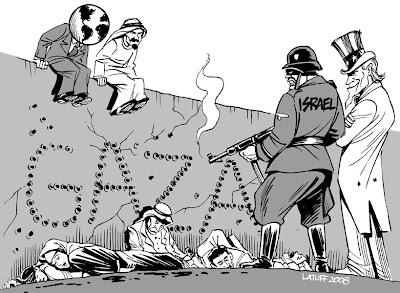


P/S: Lama dah tak makan MAGGI, NESCAFE, MCD, etc2..


P/S: Lama dah tak makan MAGGI, NESCAFE, MCD, etc2..
Feb 19, 2009
What is Taught & What should be Taught
Bismillah. Satu lagi post yg tertangguh. Afwan. Ana sebenarnya tak faham sikap sesetengah org Islam kita nih. Nama saja Islam, tapi yg diagungkan budaya barat. Mungkin bab 'ustaziatul alam' dipegang orang barat, atau mungkin kita diajarkan dengan perkara yg salah, almaklumlah, berapa tahun kita dijajah sejak Melaka jatuh ke tangan Portugis dahulu. So, untuk memastikan Islam itu tak bangkit lagi, maka budaya hedonisme pun ditanam di sanubari rakyat2 dahulu. Lalu, keturunan sekarang pun mengikut. Ibarat pak turut.
"Kami tak salah, kami berada di pihak yang benar, kita kena ikut perubahan zaman, Islam sepatutnya lebih bersikap terbuka dan moden serta sesuai diterima oleh semua pihak, kami hanya menegakkan keadilan."
Ini adalah alasan2 yang dikemukakan oleh golongan2 yang tak faham ad-Din ni, yang Islamnya pada huruf 'I' sahaja, sekadar kata nama, dan bukan huruf 'i', sebuah kata kerja. Tak faham?? Haha..
Kalau nak kata ad-Din nih tak adil, diorang nih faham ke maksud adil? Bukan maksud adil kalau memberi sama rata. Kalau begitu, kena beli baju kurung juga la utk anak lelaki kita kalau kita beli baju kurung utk anak perempuan kita kan?
Kalau nak kata ad-Din nih kolot dan tak sesuai dan perlu diubah, bukankah jumhur ulama' sentiasa mengubah fatwa mengikut ilmu usul fiqh agar dapat disesuaikan dengan kehidupan umat islam masa kini? Dan kalau tak moden, macam mana byk pula orang Barat yang moden di serata dunia boleh memeluk islam? Kenapa pula diorang nih nak contohi orang Barat yang dikatakan moden tu sedangkan di Barat pun ramai yang memiliki masalah sakit jiwa yang kronik? Pelik2..
Anyway, maybe some truth is being hide, but no matter what, when the time's come, the truth will reveal itself. Cewah.. Haha.. Barakallahufik.
What is Taught & What should be Taught
What is Taught: The first mention of man in flight was by Roger Bacon, who drew a flying apparatus. Leonardo da Vinci also conceived of airborne transport and drew several prototypes.
What Should be Taught: Ibn Firnas of Islamic Spain invented, constructed and tested a flying machine in the 800's A.D. Roger Bacon learned of flying machines from Arabic references to Ibn Firnas' machine. The latter's invention antedates Bacon by 500 years and Da Vinci by some 700 years.
What is Taught: Glass mirrors were first produced in 1291 in Venice.
What Should be Taught: Glass mirrors were in use in Islamic Spain as early as the 11th century. The Venetians learned of the art of fine glass production from Syrian artisans during the 9th and 10th centuries.
What is Taught: Until the 14th century, the only type of clock available was the water clock. In 1335, a large mechanical clock was erected in Milan, Italy. This was possibly the first weight-driven clock.
What Should be Taught: A variety of mechanical clocks were produced by Spanish Muslim engineers, both large and small, and this knowledge was transmitted to Europe through Latin translations of Islamic books on mechanics. These clocks were weight-driven. Designs and illustrations of epi-cyclic and segmental gears were provided. One such clock included a mercury escapement. The latter type was directly copied by Europeans during the 15th century. In addition, during the 9th century, Ibn Firnas of Islamic Spain, according to Will Durant, invented a watch-like device which kept accurate time. The Muslims also constructed a variety of highly accurate astronomical clocks for use in their observatories.
What is Taught: In the 17th century, the pendulum was developed by Galileo during his teenage years. He noticed a chandelier swaying as it was being blown by the wind. As a result, he went home and invented the pendulum.
What Should be Taught: The pendulum was discovered by Ibn Yunus al-Masri during the 10th century, who was the first to study and document its oscillatory motion. Its value for use in clocks was introduced by Muslim physicists during the 15th century.
What is Taught: Movable type and the printing press was invented in the West by Johannes Gutenberg of Germany during the 15th century.
What Should be Taught: In 1454, Gutenberg developed the most sophisticated printing press of the Middle Ages. However, movable brass type was in use in Islamic Spain 100 years prior, and that is where the West's first printing devices were made.
What is Taught: Isaac Newton's 17th century study of lenses, light and prisms forms the foundation of the modern science of optics.
What Should be Taught: In the 1lth century al-Haytham determined virtually everything that Newton advanced regarding optics centuries prior and is regarded by numerous authorities as the "founder of optics. " There is little doubt that Newton was influenced by him. Al-Haytham was the most quoted physicist of the Middle Ages. His works were utilized and quoted by a greater number of European scholars during the 16th and 17th centuries than those of Newton and Galileo combined.
What is Taught: Isaac Newton, during the 17th century, discovered that white light consists of various rays of colored light.
What Should be Taught: This discovery was made in its entirety by al-Haytham (11th century) and Kamal ad-Din (14th century). Newton did make original discoveries, but this was not one of them.
What is Taught: The concept of the finite nature of matter was first introduced by Antione Lavoisier during the 18th century. He discovered that, although matter may change its form or shape, its mass always remains the same. Thus, for instance, if water is heated to steam, if salt is dissolved in water or if a piece of wood is burned to ashes, the total mass remains unchanged.
What Should be Taught: The principles of this discovery were elaborated centuries before by Islamic Persia's great scholar, al-Biruni (d. 1050). Lavoisier was a disciple of the Muslim chemists and physicists and referred to their books frequently.
What is Taught: The Greeks were the developers of trigonometry.
What Should be Taught: Trigonometry remained largely a theoretical science among the Greeks. It was developed to a level of modern perfection by Muslim scholars, although the weight of the credit must be given to al-Battani. The words describing the basic functions of this science, sine, cosine and tangent, are all derived from Arabic terms. Thus, original contributions by the Greeks in trigonometry were minimal.
What is Taught: The use of decimal fractions in mathematics was first developed by a Dutchman, Simon Stevin, in 1589. He helped advance the mathematical sciences by replacing the cumbersome fractions, for instance, 1/2, with decimal fractions, for example, 0.5.
What Should be Taught: Muslim mathematicians were the first to utilize decimals instead of fractions on a large scale. Al-Kashi's book, Key to Arithmetic, was written at the beginning of the 15th century and was the stimulus for the systematic application of decimals to whole numbers and fractions thereof. It is highly probably that Stevin imported the idea to Europe from al-Kashi's work.
What is Taught: The first man to utilize algebraic symbols was the French mathematician, Francois Vieta. In 1591, he wrote an algebra book describing equations with letters such as the now familiar x and y's. Asimov says that this discovery had an impact similar to the progression from Roman numerals to Arabic numbers.
What Should be Taught: Muslim mathematicians, the inventors of algebra, introduced the concept of using letters for unknown variables in equations as early as the 9th century A.D. Through this system, they solved a variety of complex equations, including quadratic and cubic equations. They used symbols to develop and perfect the binomial theorem.
What is Taught: The difficult cubic equations (x to the third power) remained unsolved until the 16th century when Niccolo Tartaglia, an Italian mathematician, solved them.
What Should be Taught: Cubic equations as well as numerous equations of even higher degrees were solved with ease by Muslim mathematicians as early as the 10th century.
What is Taught: The concept that numbers could be less than zero, that is negative numbers, was unknown until 1545 when Geronimo Cardano introduced the idea.
What Should he Taught: Muslim mathematicians introduced negative numbers for use in a variety of arithmetic functions at least 400 years prior to Cardano.
What is Taught: In 1614, John Napier invented logarithms and logarithmic tables.
What Should be Taught: Muslim mathematicians invented logarithms and produced logarithmic tables several centuries prior. Such tables were common in the Islamic world as early as the 13th century.
What is Taught: During the 17th century Rene Descartes made the discovery that algebra could be used to solve geometrical problems. By this, he greatly advanced the science of geometry.
What Should be Taught: Mathematicians of the Islamic Empire accomplished precisely this as early as the 9th century A.D. Thabit bin Qurrah was the first to do so, and he was followed by Abu'l Wafa, whose 10th century book utilized algebra to advance geometry into an exact and simplified science.
What is Taught: Isaac Newton, during the 17th century, developed the binomial theorem, which is a crucial component for the study of algebra.
What Should be Taught: Hundreds of Muslim mathematicians utilized and perfected the binomial theorem. They initiated its use for the systematic solution of algebraic problems during the 10th century (or prior).
What is Taught: No improvement had been made in the astronomy of the ancients during the Middle Ages regarding the motion of planets until the 13th century. Then Alphonso the Wise of Castile (Middle Spain) invented the Aphonsine Tables, which were more accurate than Ptolemy's.
What Should be Taught: Muslim astronomers made numerous improvements upon Ptolemy's findings as early as the 9th century. They were the first astronomers to dispute his archaic ideas. In their critic of the Greeks, they synthesized proof that the sun is the center of the solar system and that the orbits of the earth and other planets might be elliptical. They produced hundreds of highly accurate astronomical tables and star charts. Many of their calculations are so precise that they are regarded as contemporary. The AlphonsineTables are little more than copies of works on astronomy transmitted to Europe via Islamic Spain, i.e. the Toledo Tables.
What is Taught: The English scholar Roger Bacon (d. 1292) first mentioned glass lenses for improving vision. At nearly the same time, eyeglasses could be found in use both in China and Europe.
What Should be Taught: Ibn Firnas of Islamic Spain invented eyeglasses during the 9th century, and they were manufactured and sold throughout Spain for over two centuries. Any mention of eyeglasses by Roger Bacon was simply a regurgitation of the work of al-Haytham (d. 1039), whose research Bacon frequently referred to.
What is Taught: Gunpowder was developed in the Western world as a result of Roger Bacon's work in 1242. The first usage of gunpowder in weapons was when the Chinese fired it from bamboo shoots in attempt to frighten Mongol conquerors. They produced it by adding sulfur and charcoal to saltpeter.
What Should be Taught: The Chinese developed saltpeter for use in fireworks and knew of no tactical military use for gunpowder, nor did they invent its formula. Research by Reinuad and Fave have clearly shown that gunpowder was formulated initially by Muslim chemists. Further, these historians claim that the Muslims developed the first fire-arms. Notably, Muslim armies used grenades and other weapons in their defence of Algericus against the Franks during the 14th century. Jean Mathes indicates that the Muslim rulers had stock-piles of grenades, rifles, crude cannons, incendiary devices, sulfur bombs and pistols decades before such devices were used in Europe. The first mention of a cannon was in an Arabic text around 1300 A.D. Roger Bacon learned of the formula for gunpowder from Latin translations of Arabic books. He brought forth nothing original in this regard.
What is Taught: The compass was invented by the Chinese who may have been the first to use it for navigational purposes sometime between 1000 and 1100 A.D. The earliest reference to its use in navigation was by the Englishman, Alexander Neckam (1157-1217).
What Should be Taught: Muslim geographers and navigators learned of the magnetic needle, possibly from the Chinese, and were the first to use magnetic needles in navigation. They invented the compass and passed the knowledge of its use in navigation to the West. European navigators relied on Muslim pilots and their instruments when exploring unknown territories. Gustav Le Bon claims that the magnetic needle and compass were entirely invented by the Muslims and that the Chinese had little to do with it. Neckam, as well as the Chinese, probably learned of it from Muslim traders. It is noteworthy that the Chinese improved their navigational expertise after they began interacting with the Muslims during the 8th century.
What is Taught: The first man to classify the races was the German Johann F. Blumenbach, who divided mankind into white, yellow, brown, black and red peoples.
What Should be Taught: Muslim scholars of the 9th through 14th centuries invented the science of ethnography. A number of Muslim geographers classified the races, writing detailed explanations of their unique cultural habits and physical appearances. They wrote thousands of pages on this subject. Blumenbach's works were insignificant in comparison.
What is Taught: The science of geography was revived during the 15th, 16th and 17th centuries when the ancient works of Ptolemy were discovered. The Crusades and the Portuguese/Spanish expeditions also contributed to this reawakening. The first scientifically-based treatise on geography were produced during this period by Europe's scholars.
What Should be Taught: Muslim geographers produced untold volumes of books on the geography of Africa, Asia, India, China and the Indies during the 8th through 15th centuries. These writings included the world's first geographical encyclopedias, almanacs and road maps. Ibn Battutah's 14th century masterpieces provide a detailed view of the geography of the ancient world. The Muslim geographers of the 10th through 15th centuries far exceeded the output by Europeans regarding the geography of these regions well into the 18th century. The Crusades led to the destruction of educational institutions, their scholars and books. They brought nothing substantive regarding geography to the Western world.
What is Taught: Robert Boyle, in the 17th century, originated the science of chemistry.
What Should be Taught: A variety of Muslim chemists, including ar-Razi, al-Jabr, al-Biruni and al-Kindi, performed scientific experiments in chemistry some 700 years prior to Boyle. Durant writes that the Muslims introduced the experimental method to this science. Humboldt regards the Muslims as the founders of chemistry.
What is Taught: Leonardo da Vinci (16th century) fathered the science of geology when he noted that fossils found on mountains indicated a watery origin of the earth.
What Should be Taught: Al-Biruni (1lth century) made precisely this observation and added much to it, including a huge book on geology, hundreds of years before Da Vinci was born. Ibn Sina noted this as well (see pages 100-101). it is probable that Da Vinci first learned of this concept from Latin translations of Islamic books. He added nothing original to their findings.
What is Taught: The first mention of the geological formation of valleys was in 1756, when Nicolas Desmarest proposed that they were formed over a long periods of time by streams.
What Should be Taught: Ibn Sina and al-Biruni made precisely this discovery during the 11th century (see pages 102 and 103), fully 700 years prior to Desmarest.
What is Taught: Galileo (17th century) was the world's first great experimenter.
What Should be Taught: Al-Biruni (d. 1050) was the world's first great experimenter. He wrote over 200 books, many of which discuss his precise experiments. His literary output in the sciences amounts to some 13,000 pages, far exceeding that written by Galileo or, for that matter, Galileo and Newton combined.
What is Taught: The Italian Giovanni Morgagni is regarded as the father of pathology because he was the first to correctly describe the nature of disease.
What Should be Taught: Islam's surgeons were the first pathologists. They fully realized the nature of disease and described a variety of diseases to modern detail. Ibn Zuhr correctly described the nature of pleurisy, tuberculosis and pericarditis. Az-Zahrawi accurately documented the pathology of hydrocephalus (water on the brain) and other congenital diseases. Ibn al-Quff and Ibn an-Nafs gave perfect descriptions of the diseases of circulation. Other Muslim surgeons gave the first accurate descriptions of certain malignancies, including cancer of the stomach, bowel and esophagus. These surgeons were the originators of pathology, not Giovanni Morgagni.
What is Taught: Paul Ehrlich (19th century) is the originator of drug chemotherapy, that is the use of specific drugs to kill microbes.
What Should be Taught: Muslim physicians used a variety of specific substances to destroy microbes. They applied sulfur topically specifically to kill the scabies mite. Ar-Razi (10th century) used mercurial compounds as topical antiseptics.
What is Taught: Purified alcohol, made through distillation, was first produced by Arnau de Villanova, a Spanish alchemist, in 1300 A.D.
What Should be Taught: Numerous Muslim chemists produced medicinal-grade alcohol through distillation as early as the 10th century and manufactured on a large scale the first distillation devices for use in chemistry. They used alcohol as a solvent and antiseptic.
What is Taught: The first surgery performed under inhalation anesthesia was conducted by C.W. Long, an American, in 1845.
What Should be Taught: Six hundred years prior to Long, Islamic Spain's Az-Zahrawi and Ibn Zuhr, among other Muslim surgeons, performed hundreds of surgeries under inhalation anesthesia with the use of narcotic-soaked sponges which were placed over the face.
What is Taught: During the 16th century Paracelsus invented the use of opium extracts for anesthesia.
What Should be Taught: Muslim physicians introduced the anesthetic value of opium derivatives during the Middle Ages. Opium was originally used as an anesthetic agent by the Greeks. Paracelus was a student of Ibn Sina's works from which it is almost assured that he derived this idea.
What is Taught: Modern anesthesia was invented in the 19th century by Humphrey Davy and Horace Wells.
What Should be Taught: Modern anesthesia was discovered, mastered and perfected by Muslim anesthetists 900 years before the advent of Davy and Wells. They utilized oral as well as inhalant anesthetics.
What is Taught: The concept of quarantine was first developed in 1403. In Venice, a law was passed preventing strangers from entering the city until a certain waiting period had passed. If, by then, no sign of illness could be found, they were allowed in.
What Should be Taught: The concept of quarantine was first introduced in the 7th century A.D. by the prophet Muhammad, who wisely warned against entering or leaving a region suffering from plague. As early as the 10th century, Muslim physicians innovated the use of isolation wards for individuals suffering with communicable diseases.
What is Taught: The scientific use of antiseptics in surgery was discovered by the British surgeon Joseph Lister in 1865.
What Should be Taught: As early as the 10th century, Muslim physicians and surgeons were applying purified alcohol to wounds as an antiseptic agent. Surgeons in Islamic Spain utilized special methods for maintaining antisepsis prior to and during surgery. They also originated specific protocols for maintaining hygiene during the post-operative period. Their success rate was so high that dignitaries throughout Europe came to Cordova, Spain, to be treated at what was comparably the "Mayo Clinic" of the Middle Ages.
What is Taught: In 1545, the scientific use of surgery was advanced by the French surgeon Ambroise Pare. Prior to him, surgeons attempted to stop bleeding through the gruesome procedure of searing the wound with boiling oil. Pare stopped the use of boiling oils and began ligating arteries. He is considered the "father of rational surgery." Pare was also one of the first Europeans to condemn such grotesque "surgical" procedures as trepanning (see reference #6, pg. 110).
What Should be Taught: Islamic Spain's illustrious surgeon, az-Zahrawi (d. 1013), began ligating arteries with fine sutures over 500 years prior to Pare. He perfected the use of Catgut, that is suture made from animal intestines. Additionally, he instituted the use of cotton plus wax to plug bleeding wounds. The full details of his works were made available to Europeans through Latin translations.
Despite this, barbers and herdsmen continued be the primary individuals practicing the "art" of surgery for nearly six centuries after az-Zahrawi's death. Pare himself was a barber, albeit more skilled and conscientious than the average ones.
Included in az-Zahrawi's legacy are dozens of books. His most famous work is a 30 volume treatise on medicine and surgery. His books contain sections on preventive medicine, nutrition, cosmetics, drug therapy, surgical technique, anesthesia, pre and post-operative care as well as drawings of some 200 surgical devices, many of which he invented. The refined and scholarly az-Zahrawi must be regarded as the father and founder of rational surgery, not the uneducated Pare.
What is Taught: William Harvey, during the early 17th century, discovered that blood circulates. He was the first to correctly describe the function of the heart, arteries and veins. Rome's Galen had presented erroneous ideas regarding the circulatory system, and Harvey was the first to determine that blood is pumped throughout the body via the action of the heart and the venous valves. Therefore, he is regarded as the founder of human physiology.
What Should be Taught: In the 10th century, Islam's ar-Razi wrote an in-depth treatise on the venous system, accurately describing the function of the veins and their valves. Ibn an-Nafs and Ibn al-Quff (13th century) provided full documentation that the blood circulates and correctly described the physiology of the heart and the function of its valves 300 years before Harvey. William Harvey was a graduate of Italy's famous Padua University at a time when the majority of its curriculum was based upon Ibn Sina's and ar-Razi's textbooks.
What is Taught: The first pharmacopeia (book of medicines) was published by a German scholar in 1542. According to World Book Encyclopedia, the science of pharmacology was begun in the 1900's as an off-shoot of chemistry due to the analysis of crude plant materials. Chemists, after isolating the active ingredients from plants, realized their medicinal value.
What Should be Taught: According to the eminent scholar of Arab history, Phillip Hitti, the Muslims, not the Greeks or Europeans, wrote the first "modern" pharmacopeia. The science of pharmacology was originated by Muslim physicians during the 9th century. They developed it into a highly refined and exact science. Muslim chemists, pharmacists and physicians produced thousands of drugs and/or crude herbal extracts one thousand years prior to the supposed birth of pharmacology. During the 14th century Ibn Baytar wrote a monumental pharmacopeia listing some 1400 different drugs. Hundreds of other pharmacopeias were published during the Islamic Era. It is likely that the German work is an offshoot of that by Ibn Baytar, which was widely circulated in Europe.
What is Taught: The discovery of the scientific use of drugs in the treatment of specific diseases was made by Paracelsus, the Swiss-born physician, during the 16th century. He is also credited with being the first to use practical experience as a determining factor in the treatment of patients rather than relying exclusively on the works of the ancients.
What Should be Taught: Ar-Razi, Ibn Sina, al-Kindi, Ibn Rushd, az-Zahrawi, Ibn Zuhr, Ibn Baytar, Ibn al-Jazzar, Ibn Juljul, Ibn al-Quff, Ibn an-Nafs, al-Biruni, Ibn Sahl and hundreds of other Muslim physicians mastered the science of drug therapy for the treatment of specific symptoms and diseases. In fact, this concept was entirely their invention. The word "drug" is derived from Arabic. Their use of practical experience and careful observation was extensive.
Muslim physicians were the first to criticize ancient medical theories and practices. Ar-Razi devoted an entire book as a critique of Galen's anatomy. The works of Paracelsus are insignificant compared to the vast volumes of medical writings and original findings accomplished by the medical giants of Islam.
What is Taught: The first sound approach to the treatment of disease was made by a German, Johann Weger, in the 1500's.
What Should be Taught: Harvard's George Sarton says that modern medicine is entirely an Islamic development and that Setting the Record Straight the Muslim physicians of the 9th through 12th centuries were precise, scientific, rational and sound in their approach. Johann Weger was among thousands of Europeans physicians during the 15th through 17th centuries who were taught the medicine of
ar-Razi and Ibn Sina. He contributed nothing original.
What is Taught: Medical treatment for the insane was modernized by Philippe Pinel when in 1793 he operated France's first insane asylum.
What Should be Taught: As early as the 1lth century, Islamic hospitals maintained special wards for the insane. They treated them kindly and presumed their disease was real at a time when the insane were routinely burned alive in Europe as witches and sorcerers. A curative approach was taken for mental illness and, for the first time in history, the mentally ill were treated with supportive care, drugs and psychotherapy. Every major Islamic city maintained an insane asylum where patients were treated at no charge. In fact, the Islamic system for the treatment of the insane excels in comparison to the current model, as it was more humane and was highly effective as well.
What is Taught: Kerosine was first produced by the an Englishman, Abraham Gesner, in 1853. He distilled it from asphalt.
What Should be Taught: Muslim chemists produced kerosine as a distillate from petroleum products over 1,000 years prior to Gesner (see Encyclopaedia Britannica under the heading, Petroleum).
P/S: Kalau semua ilmuwan Islam nih boleh mendahului orang lain pada zamannya, kenapa ada antara kita fikir kita perlu ubah cara yang asal? Ilmuwan Islam nih bukan sahaja bijak dalam bidang ilmu semata-mata, tetapi hafiz al-Quran. Malah dengan sumbangan mereka, daulah Abbasiyyah menjadi 'ustaziatul alam' pada zamannya. Kenapa la golongan2 nih nak lari dari fitrah dan sunnah Allah? Semoga Allah memberi hidayah kepada mereka. Amin.


